But here’s the catch you’re probably thinking: doesn’t seeing “the area” mean renting a car and burning money on that? Not necessarily. Spoiler: it’s all about picking the right base, and that base is Nice.
Why Nice Works So Well as a Base
Nice itself is a stunning city, I think Paris, but with a beach and palm trees. Two to three days here is more than enough to wander the lively pedestrian streets, check out the local market, spend an afternoon on the beach, or head up to the viewpoint to watch planes take off and land.
But the real reason Nice deserves the spotlight isn’t Nice itself, it’s everything around it. You don’t need to rent a car at all. Trains get you to almost every nearby town in 20–30 minutes. Because of that, it’s worth booking accommodation close to the train station, so your commute to and from day trips stays as short as possible.
Heads up: most Riviera beaches are pebble, not sand, so a pair of water shoes will save your feet a lot of pain when you’re wading in.
Make Sure You Have These Before You Go
The French Riviera is equal parts city-hopping and beach time, so a few things will make your days noticeably smoother:
💡 A picnic blanket — pebble beaches aren’t exactly comfortable to lie on directly, and it doubles as a spot to eat between day trips.
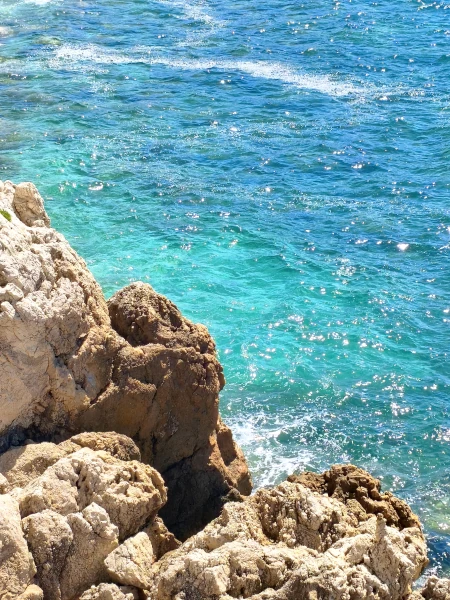
💡 A snorkel set — the water along this coast is strikingly clear, especially around Menton, so it’s genuinely worth packing rather than wishing you had one once you’re standing in it.
💡 Waterproof phone pouch — between the ferries, the beaches, and the snorkeling, you’ll want your phone protected but still reachable for photos, without risking a saltwater disaster.
💡 A quick-dry microfiber towel — packs down small, dries fast between beach stops and train rides, and takes up a fraction of the space a regular towel does.
If you have these, you are ready for the trip, so here are the day trips that make Nice worth it.
Menton — My Personal Favorite
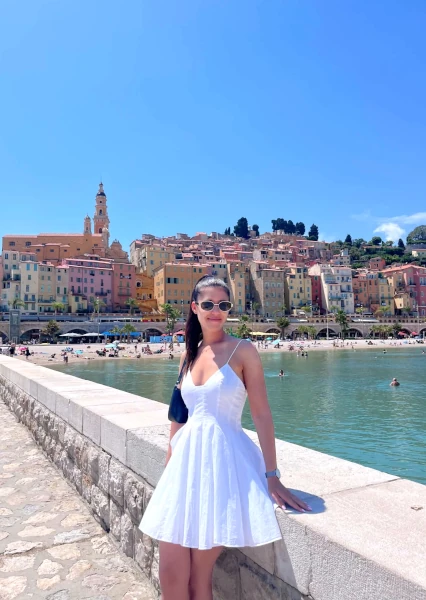
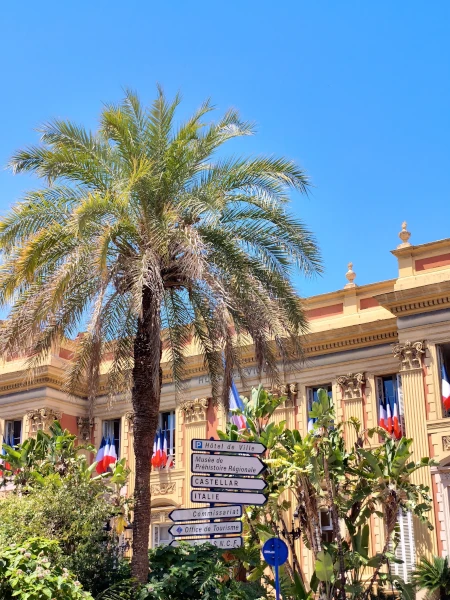
Menton sits right on the Italian-French border, just above Monaco. The water here is incredibly clear, and the town is framed by mountains, so swimming out a bit gives you a genuinely stunning view. The colorful houses make the place feel unique, and Menton’s obsession with lemons is everywhere — gelato, lemon perfumes, limoncello, you name it.
Between the mountain backdrop, the pastel houses, and the lemon-everything, this is a heavy photo-op town. Bring a fully charged power bank — you’ll easily burn through your phone battery here.
Monte Carlo
Even if you’re not a Formula 1 fan, it’s worth seeing the famous corners in person. The casino is also worth a visit, you can buy a ticket to go inside, and there’s almost always a lineup of luxury cars parked outside. Monaco is a polished, high-end city that’s genuinely nice just to walk around.
Èze
Perched high on a clifftop above the coastline, Èze is one of the most photographed villages on the Riviera, and for good reason. Its medieval old town is a maze of narrow cobblestone streets, stone archways, and flower-covered walls, all leading up to a ruined castle at the top with sweeping panoramic views over the Mediterranean. It’s small enough to explore in a couple of hours, which makes it an easy add-on to a day trip. The village is also known for its perfumeries (Fragonard has a location here) and glassblowing shops, so it’s a good spot to pick up a souvenir that isn’t a magnet.
Since most of the walk is uphill on uneven stone streets in full sun, sunscreen is non-negotiable here there’s very little shade until you reach the top.
Antibes
Antibes has a completely different vibe — less polished-luxury than Monaco, more laid-back charm. The old town (Vieil Antibes) is full of narrow streets, small boutiques, and a lively morning market. It’s also home to the Picasso Museum, set in a seafront château where the artist once worked. Right next to the old town, Port Vauban is one of the largest marinas in Europe and is basically an open-air showroom for superyachts. If you want actual beach time, Juan-les-Pins next door has some of the better sandy stretches in the area — a nice change from the pebbles elsewhere on the coast.
Cannes
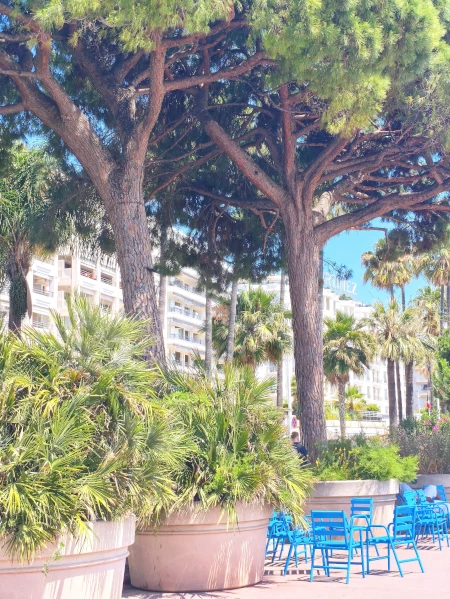
The city of luxury, once again. Famous for its film festival, but even outside of festival season, the Boulevard de la Croisette is worth a walk — think palm trees, high-end boutiques, and yachts lined up along the marina. It has a similar polished feel to Monte Carlo, just with its own film-star flavor.
So, do you need a car for the French Riviera? Not really. Pick Nice, stay near the train station, pack your sunscreen, water shoes, and a charged power bank, and you’ve got a full week of completely different day trips without ever touching a rental car counter.